 Skip to content

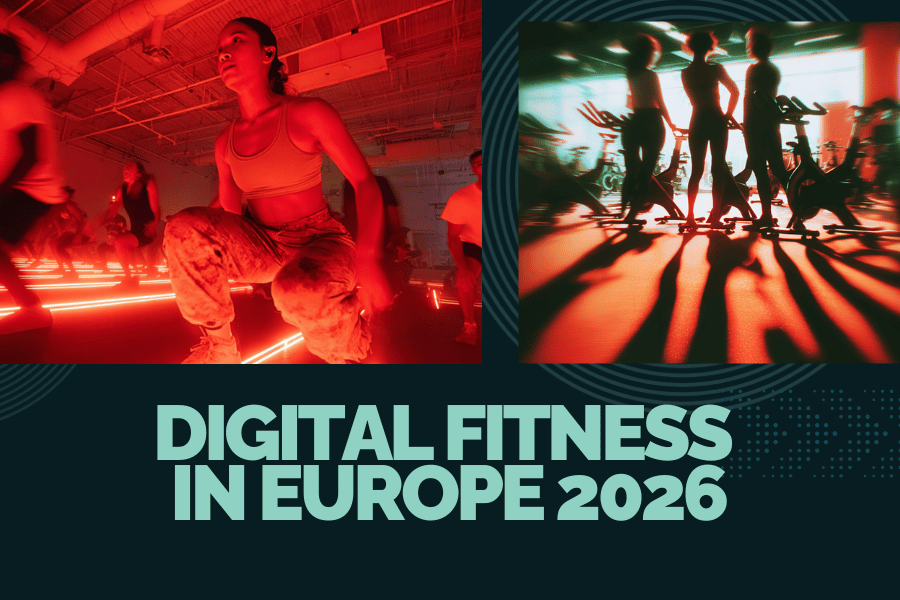
The next phase of growth in European fitness won’t be driven by facility expansion alone, the 2026 Europe Digital Fitness Trends reveal it will be defined by how quickly operators adapt to digital and reach more consumers.
Read more: 2026 Europe Digital Fitness Trends: An Operator’s GuideFor operators, the question is no longer whether to invest in digital. It’s how to integrate it effectively into a broader operating model that drives engagement, retention, and long-term growth.
The European fitness industry is entering a new phase—one defined not just by growth, but by transformation. With a market valued at €36 billion and over 71.6 million members, the sector is expanding rapidly. Yet despite this momentum, penetration across Europe remains relatively low, signalling a much larger opportunity ahead. This gap between growth and reach is where digital fitness becomes critical.
The way people engage with fitness is no longer confined to a physical location or a fixed schedule. Members are showing up more often—but they’re also expecting more flexibility, more personalisation, and more access. In fact, over 600 million gym visits were recorded in the UK alone in 2024, reinforcing that demand is strong—but behaviour is shifting.
At the same time, digital fitness has moved beyond being a “nice-to-have.” With the European digital fitness market projected to exceed €14.2 billion, it has become a foundational part of the modern fitness experience.
Top 2026 Europe Digital Fitness Trends
1. The Market Is Growing—But Still Underserved
Despite strong growth, Europe remains under-penetrated compared to more mature markets. This creates a significant opportunity to bring fitness to new audiences.
Traditional models alone won’t unlock this growth. Digital plays a key role in expanding access and lowering barriers to entry.
2. Hybrid Fitness Is Now the Standard
One of the most defining shifts in 2026 is the rise of hybrid fitness. Members no longer think in terms of “gym vs home.” Instead, they move seamlessly between in-club workouts, on-demand content, and mobile experiences. Hybrid (in-club + digital) has become the dominant behaviour pattern.
This shift requires operators to rethink how they structure their offering—not as a single location, but as a connected ecosystem.
3. Digital Has Shifted from Feature to Foundation
Digital is no longer an add-on to a fitness business. It’s embedded in how members discover, engage with, and stay connected to fitness. Consumers now expect digital touchpoints at every stage of their journey—from onboarding to ongoing engagement.
Operators who still treat digital as a secondary offering risk falling behind those who have integrated it into their core strategy.
4. Personalisation Is No Longer Optional
Personalisation has emerged as one of the most important drivers of engagement. Consumers expect tailored experiences that reflect their goals, preferences, and behaviours. AI-driven fitness and data-enabled personalisation are rapidly becoming standard expectations, not differentiators.
Generic programming is losing relevance. The future belongs to operators who can deliver more relevant, individualised experiences at scale.
5. The Gen Z Effect Is Redefining Expectations
Gen Z is accelerating the shift toward digital-first fitness. This generation expects frictionless, tech-enabled experiences, and they carry those expectations into every interaction with a fitness brand.
For operators, this means that digital experience design is no longer just a product decision—it’s a brand decision.
6. Engagement Is the New Battleground
Usage is increasing, but engagement is becoming more fragmented. Members are visiting clubs more frequently, yet their behaviour is less predictable and more varied. This creates both a challenge and an opportunity.
Operators who can maintain consistent engagement, both inside and outside the club, will outperform those who rely solely on physical visits.
Why Act On The 2026 Europe Digital Fitness Trends?
Adapting to these trends is not just about staying current—it’s about driving measurable business outcomes.
1. Increase Member Retention
Digital fitness extends the relationship beyond the club. When members can engage anytime, anywhere, they are more likely to stay connected—and stay longer.
2. Improve Operational Efficiency
Digital solutions allow operators to scale their offerings without increasing staffing costs. For example, in-club digital solutions can transform digital from a cost centre into a revenue driver.
- Fill off-peak hours
- Reduce schedule gaps
- Expand class offerings without additional payroll
3. Higher Utilization of Space and Resources
Facilities can do more with existing space by integrating virtual and on-demand content. Studios no longer need to sit empty between classes. Digital allows operators to maximise usage throughout the day.
4. Stronger Member Engagement
With mobile and on-demand access, engagement doesn’t stop when members leave the club. In fact, some of the most valuable interactions now happen outside of it.
5. Data-Driven Decision Making
Operators who leverage data realize continuous optimization, rather than guesswork.
- What content members are using
- When they are most active
- Which formats drive retention
What Your Fitness Business Should Do Now
The trends shaping digital fitness are not unique to the fitness industry—they reflect broader shifts in consumer behaviour.
Here’s how businesses can take action:
1. Build Ecosystems, Not Locations
Fitness is no longer confined to a physical space. The goal is to create continuity across every touchpoint. Operators should think in terms of ecosystems that connect:
- In-club experiences
- Digital platforms
- Mobile engagement
2. Move To An Integrated Digital Content Strategy
Simply offering digital content is not enough. Many operators fall into the trap of treating digital as a standalone product. In reality, it should be integrated into the broader operating model. Fragmentation—where digital, instructors, and data operate separately—limits ROI.
3. Extend the Role Of Instructors
Digital should enhance—not replace—instructors. The most effective operators use digital to:
- Scale their best instructors
- Maintain consistency across locations
- Extend the instructor experience beyond the studio
4. Focus On Behaviour, Not Just Programming
The most successful operators are not just adding more classes—they are aligning their offering with how members actually behave. This includes:
- Shorter, flexible formats
- On-demand access
- Personalized recommendations
5. Prioritise User Experience
Digital UX is now a core part of brand perception. A seamless, intuitive experience is no longer optional—it’s expected.
How Wexer Helps Operators Win
As the industry evolves, operators need more than just tools—they need a system. Wexer provides a connected digital fitness ecosystem that brings together in-club, on-demand, and data-driven experiences into one cohesive platform. Also check out the most recent Wexer usage that also defines the digital trends members most want in 2025 Digital Fitness Snapshot: Trends & 2026 Outlook.
- Offer A Fully Integrated Approach
- Deliver virtual classes in-club
- Extend engagement through mobile and on-demand
- Create personalised experiences using data insights
- Turn Digital into an Operating Model, Not Just An Add-On
- Fill schedule gaps
- Scale instructor impact
- Increase member engagement across all touchpoints
- Drive Measurable Results
- Improve retention
- Increase utilisation
- Create more consistent member experiences
- Built for How Members Actually Train
- Fitness is no longer linear. Members expect flexibility, accessibility, and personalisation.
- Wexer is designed around these expectations—helping operators meet demand while building more resilient, scalable businesses.
The European fitness market is growing—but growth alone won’t define success. The real differentiator lies in how operators adapt to changing behaviour. Those who build connected, digital-first ecosystems will capture the next phase of growth. Those who don’t risk being left behind.
Digital is no longer a feature. It’s the foundation of modern fitness. Are you ready to implement the 2026 Europe digital fitness trends? Contact us for your integrated digital fitness strategy at info@wexer.com