
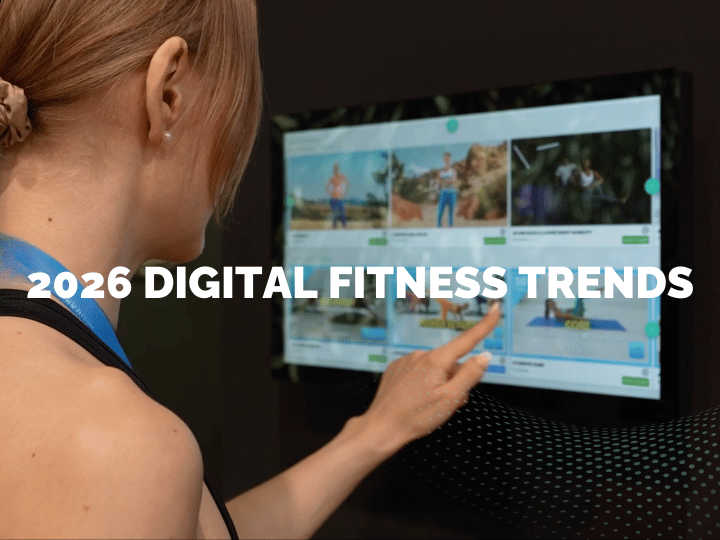
As the industry enters a new era, the 2026 digital fitness trends are reshaping how facilities operate, engage members, and deliver value far beyond the walls of the gym.
Read more: Why 2026 Digital Fitness Trends Make Hybrid EssentialThe fitness industry in 2026 looks nothing like the industry we knew even five years ago—and that’s a good thing. Digital ecosystems, AI, and data-rich training tools have finally reached a point where they’re not just “nice to have.” They’re foundational to how members expect to engage with health and wellness.
For operators, this evolution represents the greatest opportunity in decades. We’re witnessing the convergence of technology and human performance at a scale that allows facilities to deliver deeply personalized, always-connected fitness experiences that boost retention, strengthen communities, and unlock new revenue pathways.
From hybrid experiences to data-driven personalization, these trends highlight the technologies and strategies redefining what modern fitness looks like—and what members now expect. Below, we explore the key digital fitness trends shaping 2026—and what leading operators are doing right now to stay ahead.
This isn’t about replacing the gym. It’s about extending it and becoming a true hybrid.
The Virtual Fitness Boom Is Reshaping Member Expectations
The virtual fitness category is no longer emerging; it’s exploding. According to the market forecast on page 3 of the Wexer Trends Deck, the global virtual fitness market is projected to reach $106.4B by 2030, growing at an astonishing 31.2% CAGR.
That’s not incremental growth—it’s structural transformation. Operators who once saw digital content as a pandemic-era bandage now recognize it as a long-term retention engine. Virtual workouts allow members to stay connected to a facility even when life gets busy, travel disrupts routines, or schedules change.
The result? More touchpoints. More consistency. More lifetime value.
Hybrid Isn’t a Trend—It’s the New Industry Standard
Hybrid fitness has officially crossed the threshold from optional to expected.
Data from page 4 of the Trends Deck reveals:
- 41% year-over-year growth in hybrid participation.
- Hybrid members stay 3 months longer on average.
- 85% of members expect some form of digital access.
This signals an undeniable shift: Members no longer choose between in-person and digital—they want both, seamlessly connected.
For operators, this means the winning model is not just adding a little hybrid fitness content, it’s totally committing to in-person hybrid experiences.digital support, and a unified brand ecosystem that follows the members wherever they go and is accessible 24/7.
The facilities that succeed in 2026 are the ones that meet members in every moment of their wellness journey, not just the moments that happen inside the club.
Why Younger Generational Members Expect Tech That Matches Their Lifestyle
If Millennials brought boutique culture to fitness, Gen Z is bringing digital fluency.
What Generational Members Expect
Check out these generational trends for hybrid expectation:
- 73% of Gen Z members use digital tools alongside in-club training.
- 3 in 4 younger members are more likely to leave facilities that lack a strong digital ecosystem.
Gen Z doesn’t see digital support as an add-on—it’s a baseline requirement. They’ve grown up in an environment where every experience is augmented, tracked, personalized, and available instantly.
If the gym doesn’t support their needs………..They’ll find a facility that provides them with their technical requirements.
What Operators Must Do To Deliver Generational Experiences
For operators, digital is no longer a differentiator among younger audiences. It is the cost of doing business.
The Silver Generation Is Embracing Digital at Record Rates
One of the most exciting shifts happening across the industry is the rapid adoption of digital by older members—something facilities have historically underestimated.
- Adults 55+ visit facilities 25% more frequently than other demographics.
- Digital adoption among older members has increased 55%.
This segment isn’t just active—they’re loyal, engaged, and highly motivated by longevity, prevention, and performance tracking. Digital support amplifies their success and gives facilities a meaningful way to serve one of the fastest-growing fitness demographics in the world.
Wearables Become the New Infrastructure of Training
Wearables are no longer accessories. They’re infrastructure. The influx of biometric data brings powerful opportunities—if facilities know how to harness it.
- 70% of users now apply wearable data to guide workouts.
- The global wearable market is projected to reach $265B by 2026.
- 68% of members want their gym to integrate wearable data to personalize coaching and training.
Reasons To Integrate Wearable Data
- Predictive insights about burnout or injury risk.
- Adaptive programming driven by real-time physiology.
- Unified digital journeys where every metric reinforces progress.
Wexer acts as the connective tissue that brings these data points into the facility’s ecosystem—making the gym smarter, more proactive, and more personalized than ever before.
Digital Solves the Industry’s Biggest Pain Points: Churn & Underutilization
Two of the biggest operational challenges in the sector:
- Member churn: The report reveals that traditional gyms lose up to 50% of their members annually.
- Underutilized studio space: Studio classes typically sit empty 70% of the time with operational inefficiencies.
- Labor costs are rising
- Instructor shortages continue
Digital engagement drops the moment a member walks out the door, leading to “ghosting” and eventually cancellation.
Wexer Solves Churn And Underutilization
- 24/7 brand connectivity
- Predictive analytics
- A social ecosystem that keeps members engaged
Wexer’s automated digital content fills dead zones, reduces reliance on live staff, and turns unused square footage into a revenue-generating asset.
Digital isn’t just enhancing member experience—it’s strengthening the bottom line.
Digital Infrastructure Is the New Competitive Advantage
The final message from the presentation is clear: operators who want to grow in 2026 must build digital into the core of their business—not as a feature, but provide a complete hybrid infrastructure.
- Increase lifetime value by maintaining engagement beyond the facility
- Reduce overhead through automation and optimized labor use
- Future-proof operations using AI, spatial computing, and hybrid integrations
The Future Isn’t Hybrid vs. In-Person—It’s Hybrid + Human
2026 marks the moment where the digital and physical sides of fitness finally operate as one. Members want guidance, personalization, flexibility, and belonging—and digital ecosystems allow operators to deliver all of it at scale.
“We are not just a content provider; we are your digital partner.” ~ Paul Bowman, Wexer CEO ~
The facilities winning today aren’t the ones with the biggest buildings. They’re the ones with the most connected communities. Wexer is here to help you build that connection.
Ready to future-proof your facility? Let’s create a digital ecosystem that elevates your member experience and grows your business.
See how hybrid trends have esclalated since 2025 Digital Fitness Trends.