 Skip to content

Launching virtual fitness successfully takes more than just offering great content to be successful long-term, so we created a digital fitness playbook for operators that helps teams promote, measure, and scale their digital offering with confidence.
Digital fitness has become a powerful way for gyms, health clubs, hotels, residential fitness spaces, and corporate wellness teams to expand access to fitness. But there is a big difference between having a digital fitness platform and turning it into a consistently used, high-value part of the member experience.
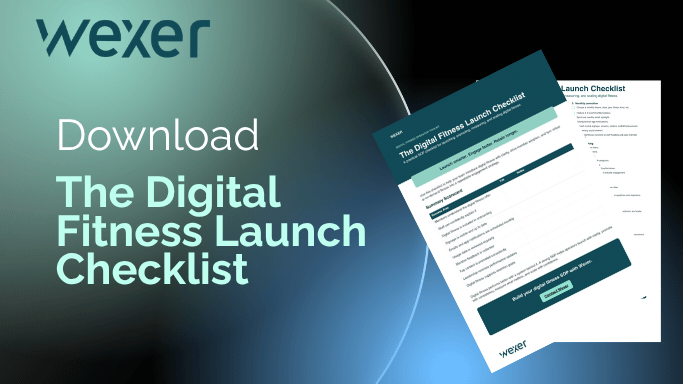
That difference comes down to creating a entire system and process with a complete Standard Operating Procedure(SOP) to make it easily replicable and scalable. Theis SOP will help you launch, promote, and scale virtual fitness.
A Standard Operating Procedure, or SOP, is a set of step-by-step instructions that helps teams carry out repeatable tasks with consistency, efficiency, and quality. In the context of digital fitness, an SOP helps operators launch, promote, measure, and improve their digital offering as a proper program, not just an available feature.
Many operators invest in virtual fitness, on-demand workouts, or digital wellness content, then face the same challenge: members do not automatically know it exists, staff are not always confident explaining it, and marketing activity often fades after launch week. The result is an adoption gap between platform installation and member usage.
That is where a digital fitness marketing playbook comes in to help you establish the SOP to effectively launch, engage, grow, and retain members with your digital fitness offering.
Wexer’s Digital Fitness Playbook for Operators frames this approach around a practical system for launching, promoting, measuring, and scaling digital fitness across gyms, health clubs, hotels, residential fitness, and corporate wellness environments.
Why Operators Need a Digital Fitness Marketing SOP
Digital fitness can support many operator goals: increasing member engagement, improving retention, extending programming beyond staffed hours, supporting beginners, serving different fitness levels, and adding flexibility to the member experience.
But those benefits are only realized when members understand the value and know how to get started.
Without a clear SOP, digital fitness promotion can become inconsistent. One staff member may explain it well, while another may not mention it at all. Signage may appear during launch week but disappear later. Email campaigns may go out once, but not become part of the monthly marketing calendar. Usage data may be available, but not reviewed in a way that informs future action.
A digital fitness marketing SOP solves this by creating a repeatable plan. It defines who does what, when they do it, how success is measured, and how the strategy improves over time.
For operators, this creates four major benefits: consistency, quality, efficiency, and ROI. Teams know how to communicate the offer. Members receive clearer messaging. Staff training becomes easier. Leadership can connect marketing activity to adoption, engagement, and retention.
Digital Fitness Playbook Action Plan
Step 1: Plan the Launch Before You Promote
A strong digital fitness marketing strategy starts before the first member email is sent.
Operators should begin by defining the audience. Who is the digital fitness offer designed to support? Busy professionals looking for short workouts? Beginners who may feel intimidated by live classes? Hotel guests who want wellness options outside staffed hours? Residents who want flexible fitness access? Corporate employees seeking guided movement during the day?
Each audience needs a clear value proposition.
Next, operators should define launch goals. For example, success in the first 30 days might include a target number of class starts, first-time users, repeat users, app clicks, QR code scans, or staff-led introductions. These metrics help teams understand whether the launch is building awareness and driving behavior.
A simple 30-day launch window can include pre-launch planning, staff training, a soft launch, a grand rollout, and a 30-day review. This gives operators enough structure to create momentum without overcomplicating the process.
Step 2: Train Staff To Become Digital Fitness Ambassadors
Staff are one of the most important drivers of digital fitness adoption.
Even the best on-demand fitness platform needs human support at the point of introduction. Members often need a simple explanation: what is available, where to find it, when to use it, and why it matters to their goals.
That means every relevant team member should have clear talking points. Front desk staff should know how to introduce digital classes to new members. Instructors should know when to recommend on-demand sessions as a complement to live classes. Sales teams should understand how digital fitness adds value to membership. Wellness teams should know how to position content around recovery, mobility, strength, mindfulness, or habit-building.
Training should also cover the first-use experience. Staff should be able to help a member log in, choose a class, understand the schedule, or scan a QR code. The easier the first experience feels, the more likely members are to come back.
The goal is not to turn every employee into a technical expert. The goal is to give staff enough confidence to make digital fitness feel accessible, relevant, and easy to try.
Step 3: Promote Digital Fitness Consistently Across Touchpoints
One launch announcement is not enough. Digital fitness needs regular visibility across the member journey. Operators should promote it through both physical and digital channels so members encounter the offer in multiple contexts.
In-club promotion might include front desk reminders, digital screens, QR codes near equipment, posters in studios, instructor mentions, and signage in recovery or functional training zones. Digital promotion might include email campaigns, app notifications, social media posts, website banners, and onboarding messages for new members.
For hotels and residential fitness spaces, promotion may also include guest welcome emails, resident newsletters, lobby screens, amenity guides, and community event calendars. For corporate wellness teams, it may include internal newsletters, workplace wellness challenges, HR portals, and manager toolkits.
The key is repetition with variety. A monthly digital fitness content calendar helps operators keep promotion fresh. One month might focus on strength. Another might highlight yoga and mobility. Another could promote short workouts for busy schedules. Seasonal campaigns, challenges, and member success stories can all keep the offer visible.
Consistent promotion keeps digital fitness present in the member experience.
Step 4: Track Usage and Member Engagement
A strong SOP does not stop at promotion. It also includes measurement.
Operators should track the metrics that show whether members are discovering and using the digital fitness offer. Useful data points may include total class starts, repeat users, popular content categories, peak usage times, location-based usage, and engagement by member segment.
This data helps answer important questions. Are members using digital fitness before work, during lunch, or in the evening? Are HIIT, yoga, cycling, strength, or recovery sessions performing best? Are first-time users returning? Are certain locations, buildings, or member groups more engaged than others?
Feedback matters too. Usage data shows what members do, while feedback helps explain why. Operators can collect member input through short surveys, staff conversations, app prompts, or informal check-ins.
Together, data and feedback help identify barriers. Maybe members do not know where to find the content. Is signage is clear? Does staff need better talking points? Do the most promoted classes match member goals?
Tracking turns digital fitness marketing from guesswork into an improvement system.
Step 5: Optimize and Scale Every Month
Digital fitness should not be treated as a set-it-and-forget-it feature. The best results come from monthly optimization.
Operators can use performance data to refresh the marketing plan. Top-performing classes can be promoted more heavily. Underused categories can be repositioned, bundled into challenges, or replaced with more relevant content. Staff talking points can be updated based on common member questions. App notifications and email campaigns can be adjusted based on engagement.
Monthly reporting also helps leadership understand value. Instead of only reporting that a digital platform exists, teams can show adoption trends, engagement patterns, popular content, and member feedback. Over time, this creates a clearer connection between digital fitness and broader business goals such as retention, member satisfaction, and programming efficiency.
This is where digital fitness becomes scalable. Once the SOP is working in one club, property, residential community, or corporate wellness program, it can be adapted and repeated elsewhere.
Turning Digital Fitness Into A Retention Tool
Digital fitness is not just a technology investment. It is a member engagement strategy.
When promoted well, it gives members more ways to stay active, more flexibility to fit fitness into their lives, and more support between in-person visits. For operators, that creates more touchpoints, stronger habit formation, and a better chance of keeping members connected over time.
A strong digital fitness marketing SOP helps operators create better awareness, more confident staff conversations, stronger first-time usage, more consistent monthly promotion, clearer reporting, and a stronger connection between digital fitness and retention.
The opportunity is clear: operators who treat digital fitness like a core program, not a passive add-on, are better positioned to drive adoption and long-term value.
Build Your SOP With The Wexer Digital Fitness Playbook
Digital fitness performs better with a system behind it. With the right playbook, operators can launch with clarity, promote with consistency, measure what matters, and scale with confidence.
Wexer helps fitness operators go beyond content and technology by supporting the operational system behind successful digital fitness adoption. Also checkout the Virtual Group Fitness Playbook Boosts Retention & Revenue.
Ready to Launch smarter. Engage faster. Retain longer? Build your playbook with Wexer.